
🔍 How Does Confirmation Bias Work in Scrum?
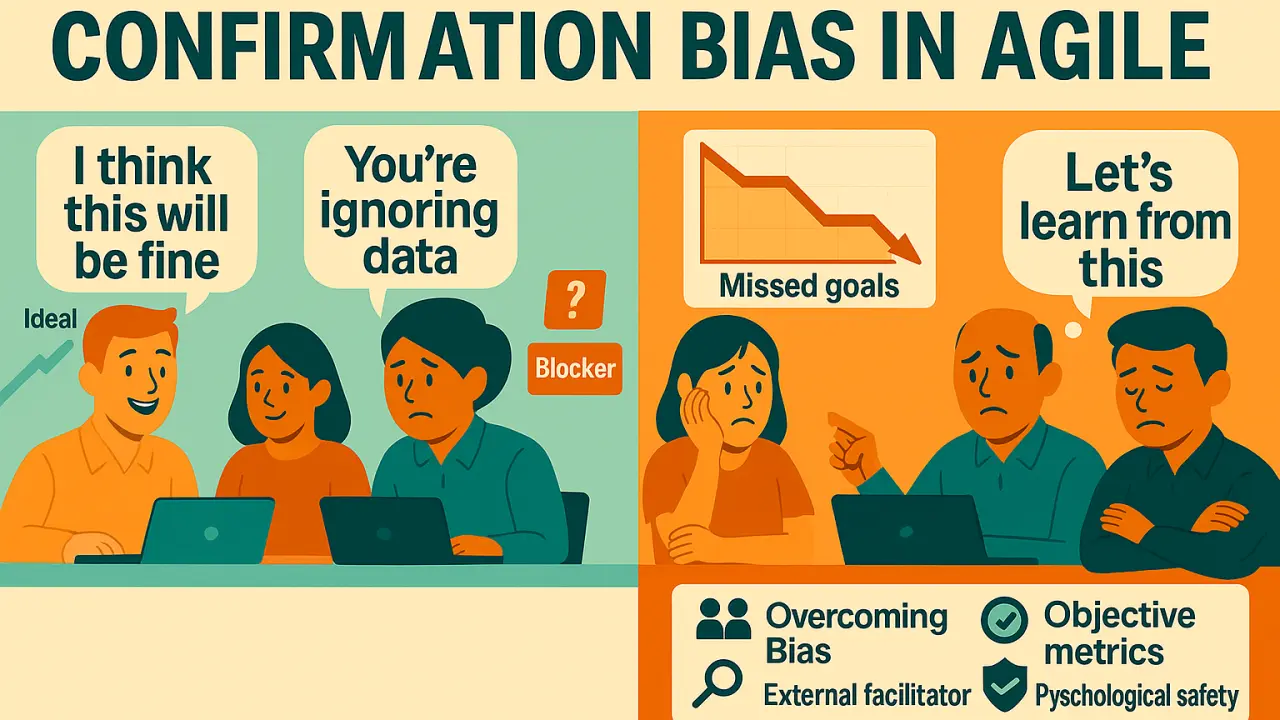
Confirmation bias is like a filter through which we unconsciously sift reality. In a Scrum environment, it can appear in several ways:
- Planning and Estimation: The team sets optimistic time estimates for completing tasks and subconsciously looks only for evidence that supports those estimates. Possible risks or obstacles? They’re barely noticed.
- Retrospectives: When reviewing a sprint, team members mostly recall what confirms their own views on what worked or didn’t work. An objective perspective gets less space.
- Customer Feedback: The team might prioritize positive feedback that confirms their assumptions about the product and ignore criticism that could reveal weaknesses.
- Daily Standups: Team members may downplay issues and focus only on what’s going well—seeking confirmation that they’re on the right track.
These situations aren’t caused by bad intentions—this is simply how our brains save energy. The problem arises when this filter prevents us from seeing the full picture.
⚠️ The Negative Impact on Individuals and Teams ?
Confirmation bias isn’t just a minor annoyance—it can have serious consequences:
- Reduced Adaptability: Agile is about flexibility and continuous improvement. If teams ignore information that doesn’t match their views, they lose the ability to respond quickly to change.
- Unrealistic Planning: This leads to stress, frustration, and unmet goals.
- Ignoring Critical Feedback: Avoiding negative input hinders growth and leads to repeating the same mistakes.
- Faulty Decision-Making: When decisions are based on distorted data, priorities can shift in the wrong direction, resources are wasted, and results fall short of expectations.
Imagine a team that believes their process is great simply because they focus on positive signals. Over time, they lose touch with reality—which is the opposite of what Agile promotes.
✅ How to Avoid Confirmation Bias and Move Forward ?
The good news is that we can mitigate this bias. Here are a few practical tips:
- Foster a Culture of Openness: Create an environment where it’s safe to share differing views. As a Scrum Master, actively encourage the team to consider “outside“ perspectives.
- Rely on Data: Decisions should be based in objective metrics (e.g., velocity, burndown chart), not just feelings or assumptions.
- Structure Your Retrospectives: Use techniques like Start-Stop-Continue, which force the team to consider different viewpoints and avoid a single narrative.
- Promote Psychological Safety: Encourage team members to speak openly about negatives and challenges—not just successes.
- Invite External Perspectives: Occasionally bring in an external facilitator for planning or retrospectives. A neutral viewpoint can reveal blind spots.
💡 Why It’s Worth the Effort
When a team overcomes confirmation bias, it unlocks the true promise of Agile: greater flexibility, better decision-making, and higher satisfaction—not just within the team, but also among customers. As a Scrum Master, I have the opportunity to lead this shift and help the team see the bigger picture. That’s the moment when a “just OK” team becomes a truly excellent one.cť tímu vidieť širší obraz. A práve vtedy sa z „priemerného“ tímu stáva tím skutočne výnimočný.