
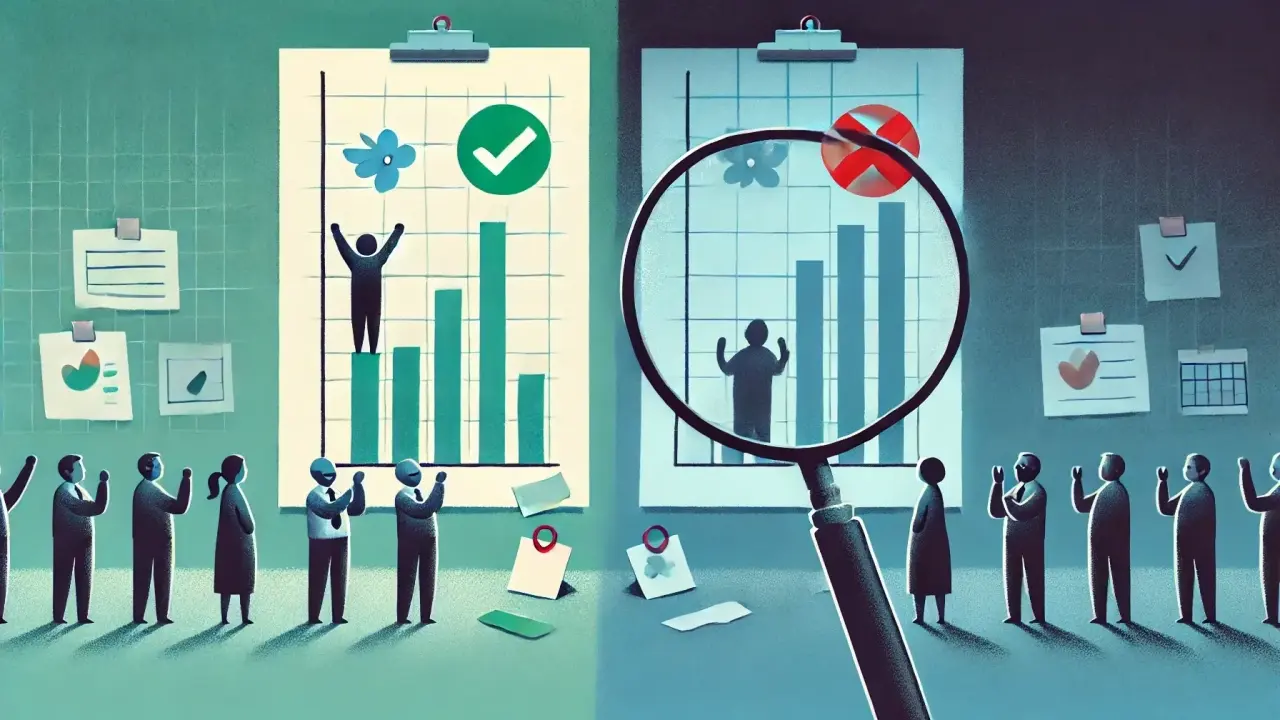
Survivorship Bias occurs when we focus only on what worked and ignore what failed—distorting our perception of reality. In Agile, this often surfaces when analyzing successful teams or projects. For example, if we see that a high-performing team used a particular tool or process, we might assume that’s the key to success—without considering the teams that used the same approach and failed.
🔍 How Does Survivorship Bias Affect Scrum Teams?
- Skewed decision-making: Teams blindly copy “best practices” without understanding why others failed, leading to inefficient processes.
- Ignoring context: Every success is unique and often rooted in specific circumstances. Overlooking failures means missing critical factors that led to them.
- Missed learning opportunities: By focusing only on winners, we lose valuable insights from analyzing failure—which often holds more lessons.
- Reduced adaptability: Focusing on “what worked” discourages experimentation and adapting to new situations.
✅ How Can We Overcome This Bias?
- Transparency and retrospectives: Discuss failures as openly as successes. Retrospectives should include analysis of what didn’t work. Ask: “What failed and why?” Bring in examples from other teams that struggled, and explore the root causes.
- Critical thinking: When hearing about successful cases, ask: “What conditions contributed to this team’s success? Do they apply to us?”
- Share the full story: Encourage a culture where it’s safe to talk about failure. Create an environment where failure is seen as a learning opportunity, not a source of shame.
💡 Why It Matters ?
In Agile, our goal is to learn and improve empirically. Survivorship Bias prevents us from seeing the whole picture, limiting our growth. By learning from failure, we can make better decisions and build more resilient teams.