I’ve often encountered situations where teams perceived the same problem in completely different ways. Why does one team see a technical blocker while another sees an opportunity for growth? The answer lies in mental models — internal maps of reality that shape how we think, decide, and interact. Techniques and ceremonies are just the top of the iceberg. The true power of Agile lies in transforming mental models — the ways people think about work, collaboration, and delivering value. In an Agile environment where adaptability and collaboration are essential, understanding these models becomes crucial. I’ve come to realize that successful agility is not just about what we do — but how we think.

Scrum isn't about what we do — but how we collaborate. As a Scrum Master, I’ve often seen teams that follow the framework perfectly — daily stand-ups, retrospectives, sprint planning, reviews — and yet, they stagnate. On the other hand, teams that may not check every ritualistic box but build on trust, empathy, and honest communication often achieve exceptional results. So what makes the real difference?

Cognitive biases can quietly but powerfully influence team dynamics and the effectiveness of Agile processes. One of the less-discussed, yet highly impactful biases is the Halo Effect. In this article, I’ll explain how it shows up in Scrum, the negative impact it can have on individuals and teams, and what we can do to reduce its influence to strengthen our Agile practice.

I’ve noticed that Agile teams often face challenges that aren’t technical or procedural — they’re human. One of the most overlooked blockers? A cognitive bias called the Fundamental Attribution Error (FAE). It silently influences how we perceive each other in teams: We tend to blame others’ behavior on their character, while justifying our own actions by external circumstances.
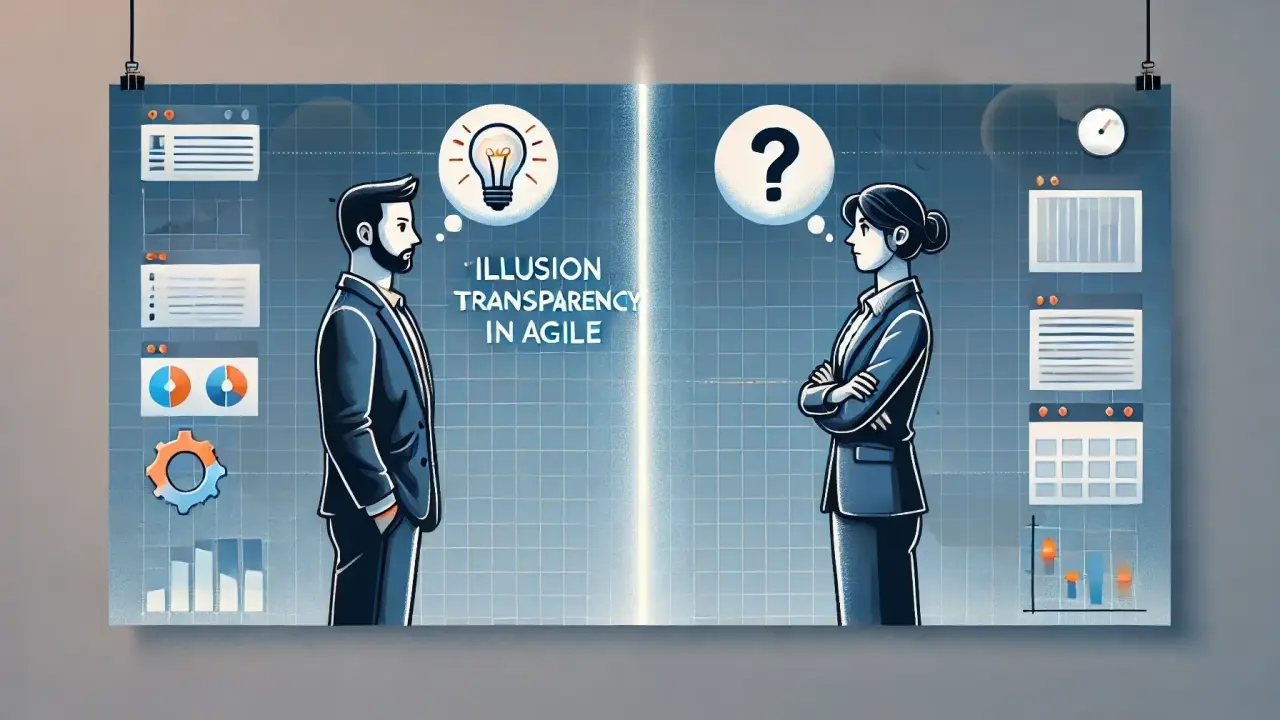
Agile teams are built on collaboration, communication, and transparency. But even the most experienced Scrum Masters or Product Owners sometimes forget one essential truth: What’s clear to me may not be clear to others. This subtle phenomenon is known as the Illusion of Transparency.

Overconfidence Bias is the tendency to overestimate one’s own abilities, knowledge, or the accuracy of one’s judgments. In Scrum and Agile, this often shows up during sprint planning—when a team overestimates its capacity and commits to more work than it can realistically complete, believing they can deliver it all within the sprint. A well-spoken Scrum Master, a decisive Product Owner, or a developer confident in their own estimate may project a sense of reliability. But what if that confidence goes beyond reality?
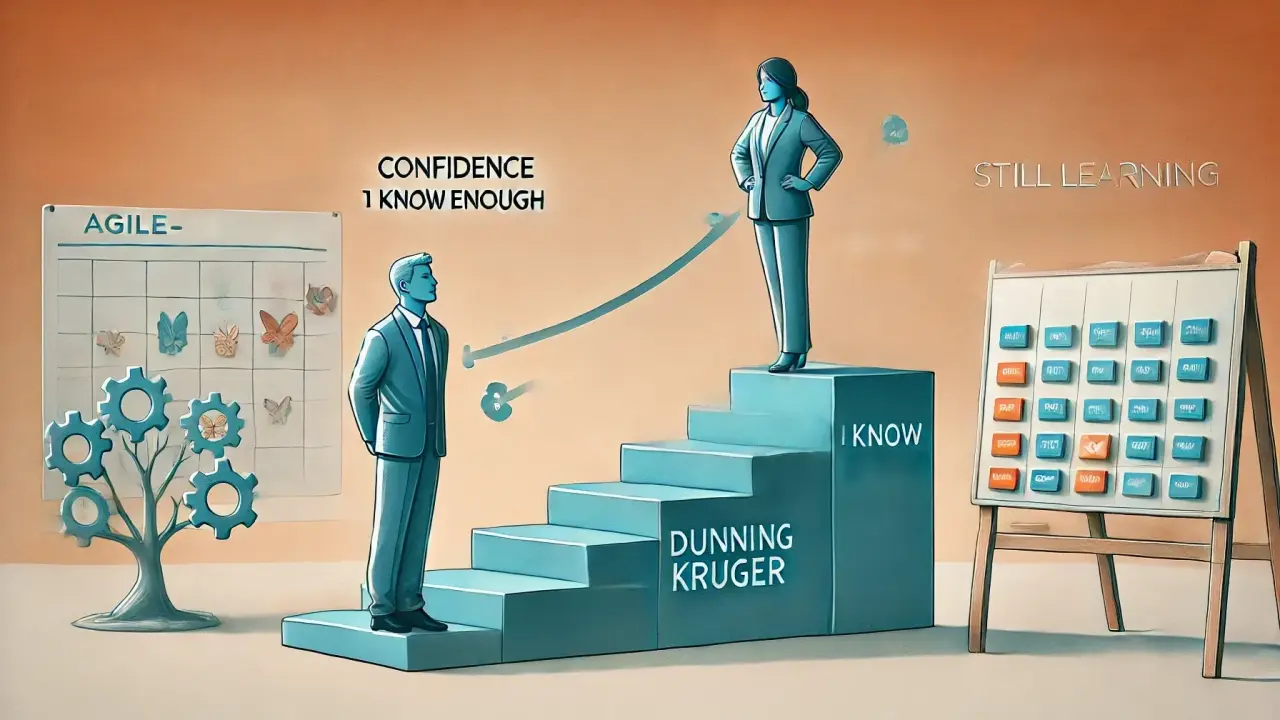
In Agile teams, confidence is often seen as an advantage. But what if that confidence is misplaced? One of the least discussed yet widespread cognitive biases in Scrum environments is the Dunning-Kruger effect—when people with low skill levels overestimate their abilities. This bias doesn’t just affect individuals. It can shape sprint outcomes, team dynamics, and the quality of decision-making.
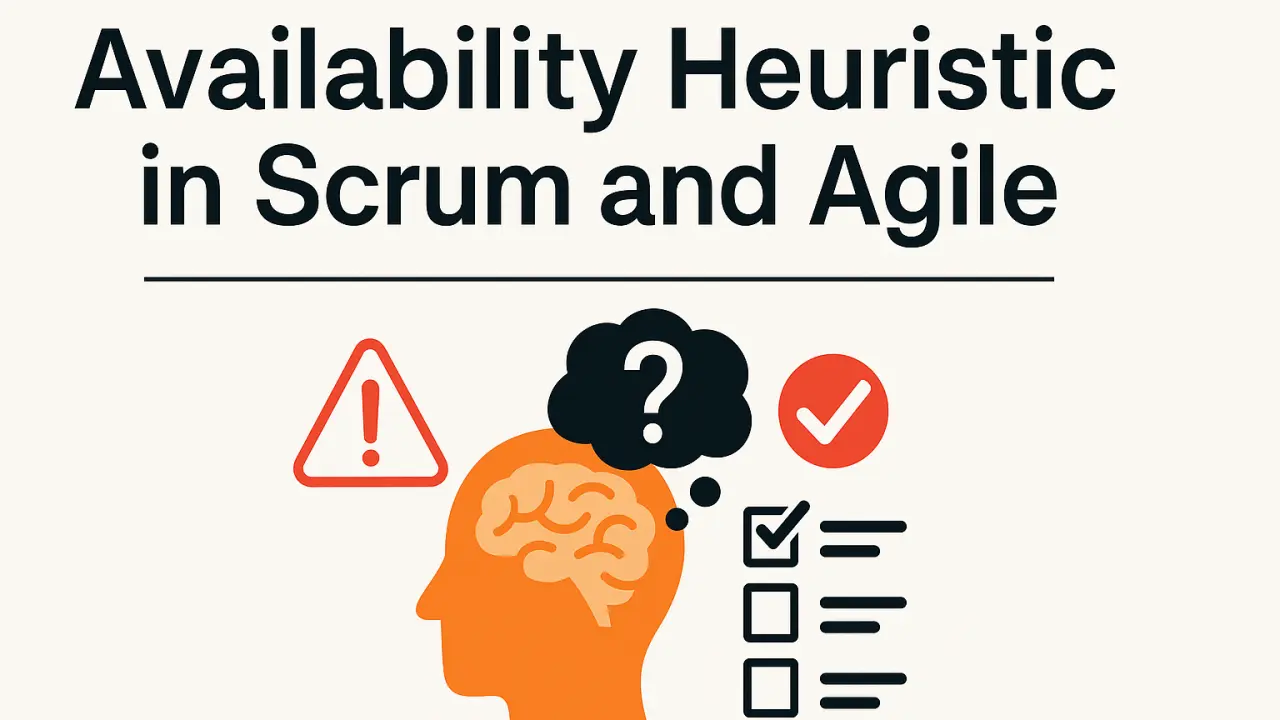
As a Scrum Master, I often observe teams making decisions not based on data or long-term patterns, but on what comes to mind first. It’s not laziness—it’s a cognitive shortcut known as the availability heuristic. And while it helps us act quickly, in an Agile environment it can easily lead us in the wrong direction.

I often observe teams sticking to old ways of working—not because they’re the best, but simply because they’re familiar. Behind this behavior lies Status Quo Bias—our tendency to favor the current state of things over change, even when change might objectively be better.

Our decisions are often shaped by cognitive biases. One of the strongest is Loss Aversion—the tendency to perceive a potential loss as much more painful than a gain of equal value.Use In Scrum and Agile environments, this bias can hold teams back from growth. Let’s explore how Loss Aversion works, its impacts, and how we can overcome it.